Lunes

Yo puedo...

I can describe myself with adjectives.

Campanazo

Duolingo

Rompehielos

¿Cuántos pesos tienes?

¿Cuántos años tienes? (Is this question the same in English?)

¿Cuántos amigos (friends) tienes aquí en Clifdale?

¿Cómo te llamas?

Lección

3 adjective "rules"

“Yo soy…” and descriptive adjectives.

Adjectives table

Adjetivo (English) Adjetivo (English) alto bajo rico pobre joven viejo fuerte débil

Práctica en grupo / práctica guiada

Short sentences: No soy alto.

Para terminar

Practice new adjectives with Quizlet, Gimkit as time permits

Martes

Yo puedo...

I can describe myself with adjectives.

Campanazo

Duolingo

Rompehielos

1) ¿Cuántos pesos tienes?

2) ¿Cuántos años tienes?

3) ¿Eres (are you) alto?

4) ¿Eres joven o viejo?

5) ¿Eres fuerte?

6) ¿Cuántos años tienes?

Lección

Papel picado

Práctica independiente / para terminar

Quizlet live / Gimkit

Miércoles,

Yo puedo...

I can describe myself with adjectives.
I can describe some features of papel picado (in English or Spanish).

Campanazo

Duolingo

Rompehielos

1) ¿Eres joven o viejo?
2) ¿Cuántos pesos tienes?
3) ¿Cómo estás?

Adjetivos con

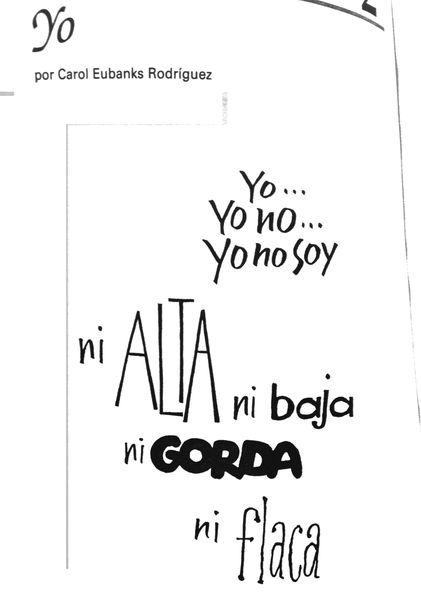
  • “Yo soy” y “Yo no soy”
  • “No soy ni … ni …”

Práctica en grupo / práctica guidada

Continuar con papel picado

Jueves,

Yo puedo...

I can write about myself with descriptive words (adjectives).

Campanazo

Duolingo

Rompehielos

Popcorn: Interpersonal questions

Lección

Adjetivos con

  • “Yo soy” y “Yo no soy”
  • “No soy ni … ni …”

Terminar y entregar papel picado

Práctica con el vocabulario (adjetivos)

Viernes

Yo puedo...

I can write about myself with descriptive words (adjectives).

Campanazo

Duolingo

Rompehielos

Popcorn: Interpersonal questions

¿Cuántos años tienes?
¿Cuántos pesos tienes?
¿Cómo eres? (Answer with "yo soy + adjetivo)
Complete this sentence for yourself: "Yo no soy ni...... ni......"

Lección

Repasar vocabulario
Quizlet set: Let's do blocks together using popsicle sticks.
Gimkit con "adjetivos"

Práctica independiente

John Wilkins

Text

Yo puedo…

I can identify and label my classes in Spanish.
I can describe give activities I do in each class.

Campanazo

Duolingo

Rompehielos

¿Qué haces durante el almuerzo?
More interpersonal questions

Lección

Model Mindmap outline

Prompt Novice High+ students (heritage speakers and higher target English-home-language speakers to conjugate verbs for themselves (yo) or us (nosotros). No “penalty” if students do not do this.

Mindmap WS with rubric:
https://wilkins.dropmark.com/1945533/36939671

Práctica individual

Practice classes/teacher "Connectors" Quizlet set
https://quizlet.com/1098326577/ms-2025-mi-horario-connectors-flash-cards

Martes, 28 de octubre

Yo puedo…

I can recognize and discuss vocabulary and ideas from a video about Monarch butterflies in Mexico and Día de Muertos.

Campanazo

Duolingo

Rompehielos

Cognate recognition warm-up: Identify congates (vocabulary) related to mariposas monarcas

Lección

Mariposas Monarcas (New Reading)
https://wilkins.dropmark.com/1945533/36942443

Práctica en grupo

Small group discussion: share final answer summary.

Práctica individual

Vocabulary practice

Miércoles, 29 de octubre

Yo puedo…

I can talk about which classes I like and dislike and explain why.

Campanazo

Duolingo

Rompehielos

Popcorn questions:

Me gusta la clase de… porque….
No me gusta la clase de… porque ….
¿Cuál es tu clase más divertida?
¿Cuál es tu clase más aburrida?

Lección

  • Opinions with adjectives for classes and teachers (divertido, aburrido, fácil, difícil, amable, estricto), verbs (estudiar, aprender, escribir, leer) and classes.

How can we make more complex sentences with this vocabulary? How can we put it together?

Review "conectores" sentences with class.

Práctica en grupo

Practice "conectores" together

Práctica individual

Individual Gimkit for pesos

Jueves, 30 de octubre

(8th: return and review Mindmap writings)

Yo puedo…

I can talk about activities I do during school.
I can describe a few school supplies I use in class.

Campanazo

Duolingo

Rompehielos

Popcorn questions:
Me gusta la clase de… porque….
No me gusta la clase de… porque ….
¿Qué necesitas para la clase de matemáticas?
¿Practicas algún deporte en la escuela?

Lección

útiles escolares:

el papel – paper
un lápiz – a pencil
una mochila – a backpack
un cuaderno / una libreta (MX) – a notebook
¿Qué más? – What else? – T prompts Ss

Práctica en grupo

In pairs - “Bag check”: Ss note all the things they have in common. We continue to expand classroom vocabulary as needed.

Práctica individual

Vocabulary practice

Para terminar…

Exit ticket in notebooks:
Qué usas en la clase de español?

Viernes, 31 de octubre

Yo puedo…

I can talk about activities I do during school.
I can describe a few school supplies I use in class.

Campanazo

Duolingo

Rompehielos

Popcorn questions

¿A qué hora empieza tu última clase?
¿Cuál es tu clase más difícil?
¿Qué necesitas para la clase de ciencias?
¿Cómo se llama tu maestro (o maestra) más amable?
5-8 más práctica con conetores

Lección

  • ¿Cuáles son los úliles escolares que usamos en esta clase?

  • Creo que tengo un poco de miedo

Práctica

Gimkit / Quizlet

8th PD: Mindmap writings review

John Wilkins

Text

Papel Picado

★ Write your nombre y apellido(s) and your periodo at the top of the page.

Instructions

Papel picado is colorful cut out paper used to decorate during celebrations in Mexico like Día de muertos. We'll watch a video on how papel picado is traditionally made. After we watch the video together, do the activities below.

1) Make your own papel picado

  • Use tissue paper and scissors to cut out shapes. Be careful and take your time! We may be able to decorate with them.

2) Answer the questions below:

Write the color in Spanish.

Example: Mi papel es azul.

A) Mi papel es...

B) What shapes did you use?
Look at the list below and check (✓) the shapes you used. If you did use the shape in the row, write the number that you made.

Shape (English) Shape (Español) Did you use it? (✓) How many? Circle círculo Square cuadrado Triangle triángulo Star estrella Cross cruz Heart corazón Diamond diamante Flower flor Sun sol Moon luna

Reflection

C) Think about your design. Write about it in English below. Consider these questions as you write: What was fun about making it? What was difficult? What did you learn about Mexican cultural symbols like papel picado from the video examples?

Rubric

Criteria 3 — Great 2 — Almost there 1 — Needs attention Shapes, Color, Reflection Shapes and color are labeled correctly in Spanish on the worksheet and match the submitted papel picado. Most shapes or colors labeled, a few missing or incorrect. Many shapes OR color missing or incorrect AND/OR reflection missing or off topic. Cultural Elements Work shows connection and respect to tradition and use of papel picado. Interesting aesthetic/design Design has little to do with papel picado cultural elements from videos/class discussions "Balled up" OR distroyed OR disrespectful artistic elements Workmanship Neat and complete. Somewhat neat; could be more organized. Messy OR hard to read OR incomplete.

John Wilkins

Text

John Wilkins

Text

Interpretive Reading: Javier (de Nicaragua)

Mi escuela empieza a las ocho de la mañana y termina a la una y media de la tarde. Tengo cinco clases en mi jornada. La que más me gusta es educación física porque puedo jugar fútbol con mis amigos a veces. Esa clase empieza a las once y veinte y termina a las doce y quince. También tengo ciencias, y me gusta porque hacemos experimentos divertidos. Esta clase empieza a las ocho y termina a las nueve. Mi tercera clase favorita es español. La maestra es amable y nos deja leer cosas interesantes. La clase de español empieza a las nueve y media y termina a las diez y veinticinco. No me gusta mucho la clase de matemáticas, que a veces es difícil, pero el profesor es bueno. Matemáticas empieza a las diez y media y termina a las once y diez. La clase que menos me gusta es inglés porque hay mucha tarea y me cuesta un poco entender las palabras. La clase de inglés empieza a las doce y media y termina a la una y media.

Tenemos dos descansos o recreos. El primero es después de mi primera clase, cuando juego con mis amigos. El segundo descanso es después de mi cuarta clase, cuando a veces hago un poco de tarea o compro algo de comer. A la una y media regreso a casa para comer con mi familia. Por la tarde, ayudo en la pulpería de mis padres. Las "pulperías" son tiendas, y generalmente son empresas familiares. La nuestra se llama "Pulpería Doña Rosita". Atiendo a los clientes y organizo los productos. Aunque es mucho trabajo, me gusta pasar tiempo con mi familia y aprender cómo funciona el negocio.

Part A: Comprehension Questions

Instructions: Use the text to answer the questions below. Answer in English.

  1. What time does Javier’s school day start and end?
  2. Which class does Javier like the most?
  3. How many breaks do students have at his school?
  4. What does he usually do during the breaks in his school day?
  5. Which class does he like the least?
  6. Bonus: What does Javier do after school in the afternoon?
  7. Bonus: What's a "pulpería"?

Part B: Chronological Order of Classes

Instructions: Javier talks about his classes from favorite to least favorite. Use the times and details in the reading to put his five classes in chronological order (that is, in the order they happen during the school day, from the morning to the afternoon). Write each class in Spanish and in English. I've done the first one for you.

Orden del día Nombre de la clase en español Name of class in English 1. ciencias Science 2. 3. 4. 5.

John Wilkins

Text

Valeria (de Guatemala)

Mi primera clase empieza a las siete y cuarenta y cinco. Es la clase de ciencias y el maestro es amable pero un poco serio. A veces hacemos experimentos sencillos con agua o plantas, y me gusta mucho. La clase termina a las ocho y treinta. Después tengo matemáticas. Empieza a las ocho y treinta y cinco y termina a las nueve y veinte. El maestro es muy paciente y explica despacio. A las diez tengo recreo. Me gusta porque puedo hablar con mis amigos y comer algo pequeño como un pan o una galleta.

  1. What time does Valeria’s first class start, and what subject is it?
  2. What does Valeria say about her science teacher?
  3. What does Valeria usually do during "recreo"?
  4. What time does her math class end?

Tomás (de Argentina)

A las siete y media tengo historia. La profesora es apasionada por su materia y siempre cuenta historias interesantes sobre nuestro país. La clase termina a las ocho y veinte. Luego tengo inglés. Empieza a las ocho y veinticinco y termina a las nueve y quince. A veces practicamos canciones con la guitarra y eso me divierte. Después, a las doce en punto, tengo almuerzo con mis compañeros. Comemos en la cafetería escolar y hablamos un rato antes de volver a clase.

  1. What time does Tomás have history class, and what does she do in class?
  2. What do they sometimes do in English class?
  3. What time does lunch start?

Camila (de Colombia)

Mi día escolar empieza con arte a las siete y cuarenta y cinco. La profesora es tranquila y creativa; siempre nos deja escuchar música suave mientras dibujamos. La clase termina a las ocho y media. Luego tengo educación física. Empieza a las ocho y treinta y termina a las nueve y cuarto. El profesor es muy gracioso y nos motiva a correr. Más tarde, a las once y media, tengo recreo, y después, a las doce y media, tengo español hasta la una y quince. Mi profesora de español es muy paciente y divertida.

  1. What time does Camila’s first class start, and what is the subject?
  2. What do the students get to do in Art?
  3. What's Camila's PE teacher like?
  4. What time does Camila’s Spanish class end?

John Wilkins

Text

John Wilkins

Text

Lunes, 20 de octubre

Yo puedo…

I can understand descriptions of my classes.

(Nota, 8o pd: Loción prohibida)

Campanazo

Duolingo

Rompehielos

Popcorn:
* ¿Cuál es tu clase favorita?
* ¿Cuál prefieres, la clase de matemáticas o la de ciencias?

Lección

Interpretive Reading and Presentational Writing
https://wilkins.dropmark.com/1945533/36889176

Práctica en grupo

Review examples

Martes, 21 de octubre

Yo puedo...

I can say when my classes begin and end.

I can my classmates a few questions about their school schedules.

Campanazo

Duolingo

Rompehielos

Interpretive Reading
Popcorn questions and comprehension checks:
https://wilkins.dropmark.com/1945533/36923418

Lección

Review times and “empieza” / “termina”

Práctica

Try this with your own schedule. You can use Quizlet for the class names, but you should have them all in your notes now.
We'll review together.

Miércoles, 22 de octubre

Yo puedo...

I can understand and answer questions about schedules and school preferences.

Campanazo

Duolingo

Rompehielos

  • ¿A qué hora empieza tu clase favorita?
  • Etc.

Lección

Práctica lectora

Práctica

Repasar vocabulario

Jueves, 23 de octubre

Yo puedo...

I can recognize some school-related verbs to describe what I do at Clifdale.

Campanazo

Duolingo

Rompehielos

¿Qué te gusta hacer en la cafetería?
¿Qué te gusta hacer en el gimnasio?
¿Qué te gusta hacer en la biblioteca (library)?

Lección

  • Crear lista de actividades (verbos) que hacemos aquí en Clifdale.

Viernes

Yo puedo...

I can describe my schedule and activities I do at school.

Campanazo

Duolingo

Rompehielos

1) ¿A qué hora empieza tu clase favorita?
2) ¿A qué hora empieza tu clase de español?
3) ¿Cómo es tu maestro/a de matemáticas?
4) ¿Qué haces en el gimnasio?
5) ¿Qué haces en tu clase de lengua y literatura?

Lección

  • Create Mindmap
  • Draw 7 circles/bubbles on a new page in your notebook.
  • Label your 6 classes, with one class in each circle or bubble.
  • In the 7th bubble, write "Almuerzo / Lunch"
  • Draw three lines off of each bubble. On each line, write one activity (verb, verb + object, etc.) that you do in that class.

Práctica en grupo
Gimkit para practicar los verbos

John Wilkins

Text

John Wilkins

Text

La clase perfecta

Part A) Instructions: Read each row. Circle the option in each row that describes a perfect class in your opinion.

no. opción A opción B opción C 1 tiene muchos estudiantes tiene pocos estudiantes tiene un estudiante 2 es divertida es aburrida es muy aburrida 3 es fácil es difícil es imposible 4 el maestro es amable el maestro es estricto el maestro es antipático (mean) 5 empieza temprano empieza tarde no empieza nunca 6 hay mucha tarea (homework) hay poca tarea hay tarea todos los días 7 los estudiantes son tranquilos los estudiantes son locos los estudiantes son perezosos 8 la clase es seria la clase es divertida la clase es silenciosa 9 el maestro es paciente el maestro es impaciente el maestro grita (yells) mucho 10 las actividades son útiles las actividades son inútiles no hay actividades 11 el maestro (o la maestra) es apasionado(/a) por su materia el maestro no está interesado en su materia el maestro no enseña nada 12 hay muchas presentaciones no hay presentaciones hay presentaciones todos los días

Escritura: En una clase ideal…

Part B) Instructions: Write five (5) complete sentences in Spanish following the prompts below. You can start each sentence with, "En una clase ideal" (In an ideal class,...) Use the descriptions on the other side of this page for ideas and to help with making the sentences.

Model:

En una clase ideal, hay pocos estudiantes y el maestro es amable.

Write your own sentences:

1) Write one sentence about how many students are in the class.

2) Write one sentence about the teacher’s personality.

3) Write one sentence about the activities in the class.

4) Write one sentence about the students’ behavior or attitude in class.

5) Write one sentence about when the class starts.

1)

2)

3)

4)

5)

John Wilkins

Text

John Wilkins

Text

Part A)

Sentence Unscramble

Instructions: Unscramble the words to make a complete sentence in Spanish. Write the corrected sentence after the arrow. Next, write the English meaning of the sentence beside the unscrambled sentence.

Example:

años / tengo / trece → Tengo trece años. / I'm thirteen years old.

1) fútbol / gusta / jugar / me →

2) alto / soy / y / delgado →

3) gusta / te / nadar / en / el / lago / ¿ / ? →

4) amigos / mis / tarde / hablo / con / en / la →

5) videojuegos / jugar / prefiero / mis / con / amigos →

6) de / eres / dónde / tú / ¿ / ? →

7) gusta / levantar / en / pesas / gimnasio / me / el →

8) cumpleaños / es / junio / el / quince / mi / de →

9) café / no / gusta / me / tomar →

10) caminar / gusta / ciudad / me / la / en →

Part B)

Circle the True Statements

Instructions: Read each square. Circle the sentences that are true for you personally. Do not circle the sentences that are not true.

Nací en Carolina del Sur Tengo doce años Mi cumpleaños es en diciembre Soy bajo/a Mi pelo es negro Soy de México Me gusta jugar fútbol No me gusta el café Soy alto/a Tengo ojos cafés Nací en otro estado Tengo trece años Mi cumpleaños es en junio Prefiero dibujar Tengo pelo rubio Soy de Carolina del Norte Me gusta correr Tengo una hermana Soy tímido/a Tengo los ojos verdes Nací en otro país Tengo catorce años Mi cumpleaños es en mayo Prefiero cantar Mi pelo es largo Soy de Chile Me gusta nadar No tengo hermanos Tengo cien años Tengo cincuenta pesos

John Wilkins

Text

Lunes, 06 de octubre

Yo puedo...

Interpersonal:
* I can answer simple questions about myself.
* I can say if I like or don’t like some activities.

Rompehielos

Interpersonal Practice worksheet

Assessment: Interpersonal

https://wilkins.dropmark.com/1945533/36859246

Interpretive reading practice while some students do pair speaking

https://wilkins.dropmark.com/1945533/36858933

Martes , 07 de octubre

Yo puedo...

Interpersonal:
* I can answer simple questions about myself.
* I can say if I like or don’t like some activities.

Interpretive:
* Answer questions about what people are like and activities they like to do.

Interpretive Reading

Continue Interpersonal Assessment in pairs

After you complete the Interpretive Assessment (reading), turn it in in the green basket. Next, complete the "práctica escrita" / writing practice worksheet. Both sides. Keep it and review it for tomorrow.

Only after you have completed the reading (and turn it in) and the writing practice (keep it), should your laptops be out. Continue with your Duolingo skills tree until the end of class.

Miércoles, 08 de octubre

Interpersonal:
* I can answer simple questions about myself.
* I can say if I like or don’t like some activities.

Presentational:
* I can write about what I am like and activities I like to do.

Campanazo

Duolingo

Presentational Writing

Continue interpersonal conversations / oral interviews

When you have completed the writing, place it in the green basket. Go to wilkins.dropmark.com and open the first link in a new window or tab. Do flashcards, match (or blocks), and learn on the "Clases de Clifdale" study set. Leave your sound muted so you do not interrupt other students that may still be writing.

Here's the link: https://quizlet.com/677318751/ms-las-clases-flash-cards/?i=pt0o3&x=1jqt

Jueves, 09 de octubre

Campanazo

Duolingo

Complete missing Readings and Writings

6th grade - algo especial

7th and 8th grades:

Yo puedo...

I can give a description of some of my teachers and classes.

Rompehielos

1) ¿Qué te gusta hacer en tu tiempo libre?
2) ¿Qué actividad te gusta hacer aquí en Clifdale?

Lección

Answer these questions in your notebook. We'll discuss them

1) ¿Cuál es tu clase favorita?
2) ¿Cómo es tu maestro (o maestra) de inglés?
3) ¿Cómo es tu clase de matemáticas?
4) ¿Cómo se llama tu maestro favorito?

Práctica

Práctica con el vocabulario

John Wilkins

Text

John Wilkins

Text

Práctica lectora

Instructions: Read the text below. In the answer chart, each row has two sentences. Circle the sentence that is correct according to the text. Do all of the first set of questions. If you want, you may also try the next set of questions. They are a little bit more advanced.

Me llamo Raúl Contreras Mella. Soy de Valdivia, Chile, pero nací en el hospital de Valparaíso, Chile y crecí en Greenville, Carolina del Sur. Mi papá trabaja en una compañía que hace piezas para BMW, por eso vinimos aquí cuando yo tenía seis años. Ahora tengo trece años y mi cumpleaños es el doce de mayo. Soy alto y delgado (o flaco). Mi cabello es corto y negro y mis ojos son de color verde. A veces hablo mucho con mis amigos, pero con personas nuevas soy un poco tímido. No hablo mucho español ahora. Todos mis amigos hablan inglés. Hablo inglés con mi hermano, pero prefiero hablar español con mi papá.

En la escuela me gusta dibujar y escribir, pero prefiero jugar videojuegos con mis amigos. Por la tarde me gusta jugar al fútbol en la cancha cerca de mi casa. También me gusta levantar pesas en el gimnasio de la escuela porque quiero ser más fuerte. No me gusta ir de compras porque es aburrido. Casi nunca voy a la playa porque está lejos. Pero me gusta explorar la ciudad en bicicleta y de vez en cuando me gusta nadar en el lago.

(✔) Circle the correct description in each row. You will only circle one description per row.

Option A Option B Option C Raúl is from Valdivia, Chile. Raúl is from Greenville, South Carolina. Raúl is from Spain. Raúl’s family moved because his dad works in Greenville. Raúl’s family moved because his mom wanted to study. Raúl’s family moved because his mom likes BMW. Raúl is six years old. Raúl is thirteen years old. Raúl is sixteen years old. Raúl’s birthday is May 12. Raúl’s birthday is December 5. Raúl’s birthday is July 8. Raúl is tall and thin. Raúl is short and stocky. Raúl doesn't talk about his height. Raúl has short black hair. Raúl has long black hair. Raúl has short brown hair. Raúl’s eyes are brown. Raúl’s eyes are green. Raúl’s eyes are blue. Raúl likes to draw and write at school. Raúl doesn’t like to draw or write. Raúl only likes to run at school. Raúl prefers to play video games. Raúl prefers to shop. Raúl prefers to sing in the choir. Raúl likes to play soccer in the afternoon. Raúl never plays soccer. Raúl only plays baseball in the afternoon.

Read the text again. The questions below are not required questions, but you should still try them!

Option A Option B Option C Raúl grew up in Greenville after moving from Chile. Raúl stayed in Chile his whole life. Raúl grew up in Valparaíso, not Greenville. Raúl lifts weights because he wants to be stronger. Raúl runs because he wants to be faster. Raúl lifts weights because his coach tells him to. Raúl is sometimes shy with new people. Raúl is never shy with anyone. Raúl is always shy with everyone, even his best friends. Raúl explains the family moved to be near the mountains. Raúl never gives reasons for moving. Raúl explains his family moved for his father’s job.

John Wilkins

Text

Lunes, 29 de septiembre

Yo puedo...

I can answer simple questions about myself.
I can say if I like or don’t like some activities.

Campanazo

Duolingo

Rompehielos

Popcorn questions

  • ¿Te gusta (verbo)?
  • Otras preguntas

Lección

  • ¿Prefieres…? Questions with two verbs.
  • “Prefiero XYZ” y/pero “no me gusta XYZ”

Práctica en grupo

Gimkit / Quizlet live with common activities (verbs)

Práctica individual (para terminar)

In your notebooks, write

  • Me gusta comer (one food that you like)
  • Me gusta tomar (one drink that you like)
  • No me gusta (verb or thing), prefiero (verb or thing)

Martes, 30 de septiembre

Yo puedo...

I can speak about activities I like and don’t like.
I can understand what others like to do.

Campanazo

Duolingo

Rompehielos

Use the text below to answer the questions:

Hola, me llamo Marisol García Quiñones y tengo veintidós años. Mi cumpleaños es el doce de abril y soy de Quito, Ecuador. Me gusta hablar con mis amigos, pero en general no me gusta salir (to go out), prefiero estar en casa y dibujar en mi cuaderno. No me gusta cantar porque soy un poco tímida, y por eso prefiero jugar videojuegos. Además, no me gusta ir de compras en la ciudad; en cambio, prefiero comprar cosas cerca de mi casa. Hoy tengo cinco dólares en mi bolsillo y estoy contenta porque quiero comprar un jugo de naranja. La botella grande de jugo cuesta tres dólares, así que tengo suficiente dinero para comprarlo.

Comprehension questions:

1) What is the person’s name?
2) How old is she?
3) When is her birthday?
4) Where is she from?
5) What does she not like to do? (At least two examples)
6) What does she prefer to do instead? (Give at least two things.)
7) How much money does she have in her pocket?
8) What does she want to buy, and how much does it cost?

Lección

Actividades con emojis

Práctica en grupo

Miércoles, el primero de octubre

Yo puedo...

I can understand short readings about what people are like and what they like to do.

I can write about activities I like to do.

Campanazo

Duolingo

Rompehielos

  • Preguntas
  • Review Emoji WS

Lección

"Sobre mí" texts

Práctica

Jueves, 02 de octubre

Yo puedo...

I can read and understand short texts about personal descriptions and activities.

Campanazo

Duolingo

Rompehielos

¿Qué te gusta hacer en la mañana?
¿Qué te gusta hacer en la tarde?
¿Qué te gusta hacer por la noche?

Upcoming Integrated Performance Assessment: Interpersonal Speaking goals

Lección

Review Sidewalk Interviews

Práctica en grupo

Quizlet, Gimkit

Viernes, 03 de octubre

Yo puedo...

I can speak about activities I like and don’t like.

I can understand what others like to do.

Campanazo

Duolingo

Rompehielos

¿Qué te gusta hacer...

  • ... con tu familia?
  • ... los sábados?
  • ... en octubre?
  • ... en la clase de español?
  • ... antes de (before) dormir?
  • ... en la cafetería?

Lección

If you still have your interpersonal outlines, get those out. They look like this: https://wilkins.dropmark.com/1269530/30861064

Interpersonal prep

Práctica

Gimkit, Quizlet Live

John Wilkins

Text

Lectura: Mi licencia

Hola, me llamo Muriel Castillo Fernández. Tengo veintidós años. Soy de Honduras y mi nacionalidad es hondureña. Soy baja y delgada. Mi pelo es negro y corto, y mis ojos son cafés. Mi tipo de sangre es O positivo. Mi cumpleaños es el doce de noviembre. Mi dirección es Calle Central, número 45, en Greenville, Carolina del Sur.

Mido ciento sesenta centímetros. Uso lentes todos los días. Soy trabajadora y responsable. En mi licencia aparece mi firma: Muriel Castillo Fernández. También aparece mi número de licencia: 2940531. Siempre llevo mi licencia en mi cartera cuando conduzco mi carro.

Preguntas (Circle the correct answer)

1) What is Muriel’s full name?

a) Muriel López García

b) Muriel Castillo Fernández

c) Muriel López Fernández

d) Muriel Castillo García

2) How old is Muriel?

a) veinte años

b) veintiún años

c) veintidós años

d) veintitrés años

3) Muriel’s nationality is:

a) mexicana

b) cubana

c) hondureña

d) chilena

4) Muriel’s birthday is:

a) el dos de noviembre

b) el doce de noviembre

c) el doce de diciembre

d) el doce de octubre

5) Muriel’s hair is:

a) rubio y largo

b) negro y corto

c) castaño y rizado

d) rojo y largo

6) Muriel’s eyes are:

a) azules

b) verdes

c) cafés

d) grises

7) Muriel’s blood type is:

a) A positivo

b) B negativo

c) O positivo

d) AB positivo

8) What is Muriel’s height?

a) ciento cincuenta centímetros

b) ciento sesenta centímetros

c) ciento setenta centímetros

d) ciento ochenta centímetros

9) Where does Muriel live?

a) Calle Verde, número 12, Greenville

b) Calle Central, número 45, Greenville

c) Calle Azul, número 20, Spartanburg

d) Calle Roja, número 15, Columbia

10) What does Muriel always carry?

a) sus lentes

b) su teléfono

c) su licencia en su cartera

d) su mochila

John Wilkins

Text

John Wilkins

Text

Lunes, 22 de septiembre

Yo puedo...

I can say activities and items that I like.

Campanazo

Duolingo

Rompehielos

Add these questions to your notebook and ANSWER them for yourself. You can simply use "sí" or "no". Don't tell your compañeros de clase what these questions mean if you know. We want everyone to take their best guess and try to answer.

1) ¿Te gusta tomar café?
2) ¿Te gusta comer chocolate?
3) ¿Te gusta andar en bicicleta 🚲?
4) (Popcorn question practice after these 3 questions)

Lección

Me gusta / Me gustan

1) Me gusta + el/la + noun
2) Me gustan + los/las noun (pl)
3) Me gusta + verb (+ verb + verb...)

Martes, 23 de septiembre

Yo puedo…

I can write descriptions about myself.

Campanazo

Duolingo

Rompehielos

Popcorn questions
Review two handouts for today

  • Read instructions for the text and research questions
  • Read instructions for the "Licencias" project

Lección

Lectura: Mi licencia
Read the text on the handout and answer the questions without your laptop. Next, do part Part B with your laptop. Be sure to check the sources for your answers.

Práctica

Licencias de conducir

Miércoles, 24 de septiembre

Yo puedo…

I can write descriptions about myself.
I can say activities and items that I like.

Campanazo

Duolingo

Rompehielos

Preguntas con ¿Te gusta...?

Lección

A) Continuar con las licencias
B) Common activities
https://quizlet.com/1081781904/ms-actividades-01-2025-flash-cards/

Práctica en grupo

Jueves, 25 de septiembre

Yo puedo…

I can write descriptions about myself.
I can say activities and items that I like.

Campanazo

Duolingo

Rompehielos

Popcorn questions then "common questions" on Wayground

Lección

Interpersonal Checklist

Práctica

Pair conversations with partner (you can use your checklist)

Si hay tiempo

Quizlet, Gimkit para practicar el vocabulario

Viernes, 26 de septiembre

Yo puedo…

I can write descriptions about myself.
I can say activities and items that I like.

Campanazo

Duolingo

Rompehielos

  • Popcorn questions
  • Turn in Licencias in the green basket

Lección

Preguntas comunes (con gustar)

Práctica en grupo

Quizlet, Gimkit, Wayground si hay tiempo

John Wilkins

Text

Directions

For this assignment, you'll create a driver’s license on the back of this paper. Our goal is to write more about ourselves in real-life contexts and show that we recognize some common cultural symbols and examples from the Spanish-speaking world.

Before you begin, write your name and period are on this side of the page.

1) Fill in all the boxes on your driver’s license in Spanish:

  • Nombre y apellidos, cumpleaños, dirección (you do not have to use your real address), color de pelo, color de ojos, altura en centímetros (make sure you use centimeters), firma, and the banner for your país (your chosen Spanish-speaking country).
  • You can select any country from the Spanish-speaking world. If you need ideas, look at the stamps we made, the passport activities we created, or pick a country that interests you.

2) A Picture of yourself:

What's important? You need to show the color of your hair and eyes. I've added eyes to the photo box so you won't forget. You can simply color them in. It doesn't have to be a masterpiece. (Also, since you've already created a picture for your pasaporte, you only have to draw in your eyes and your hair on the license if you want.)

3) At the top, make a banner for your license using a single país.

You can choose any Spanish-speaking country you would like. The banner must show examples from the culture of your country. Good examples include famous foods, landmarks, plants, animals, and/or famous people.

3 — Great 2 — Almost there 1 — Needs attention Content All boxes filled with your personal information, height in centimeters, signature. A couple / a few boxes missing or unclear. Incorrect information based on descriptions Multiple boxes missing information Creativity and craftsmanship Picture drawn, hair + eye color noted, work is neat and colorful. Picture and labels included but messy or rushed. No picture, missing labels, or very messy. Interculturality Spanish-speaking country banner shows a clear cultural symbols (food, landmark, etc.) Country chosen but mistakes in nationality OR banner is simple/unclear No Spanish-speaking country OR banner missing/negative.

John Wilkins

Text

Read the text below about Octavio and Machu Picchu. Use the text to answer each question. For questions 1 - 4, circle either "true" or "false". For other questions, write your answer.

Hola, me llamo Octavio García Ledesma. Soy de Tepic, México. Tengo doce años. Soy joven y trabajador. Estoy feliz porque vamos a viajar (we're going to travel) a Perú con mi clase. Vamos a visitar Machu Picchu. Es una ciudad muy vieja. Es bonita y grande.

Llevo conmigo (I'm bringing along) un cuaderno amarillo y un lápiz azul para escribir sobre mi viaje. En Perú, el dinero se llama "soles". En Estados Unidos, el dinero es el "dólar" y nosotros en México usamos "pesos". En Perú, un lápiz nuevo cuesta 1 sol. Un paquete de lápices cuesta 5 soles. Cinco soles son unos veinticinco pesos mexicanos. La bandera de Perú es roja y blanca.

Instructions

Read the short story about Octavio and Machu Picchu. Use the text to answer each question. For questions 1 - 4, circle "True" or "False". For questions 5 - 6, write out your answer in English.

Questions

Novice Low (True/False)

1) Octavio is from Tepic, Mexico. (True / False)
2) Octavio says he's young and hardworking. (True / False)
3) The flag of Peru is white and red. (True / False)
4) A pack of pencils costs 5 soles in Peru. (True / False)

Novice Mid

5) According to the second paragraph, what is Octavio bringing with him? What COLORS are these items?
6) What are two words from the text that describe Machu Picchu? (Remember, the images are part of the text.)
7) Roughly how much is five Peruvian soles in Mexican pesos? (How much is 5 soles worth?)

Novice High

8) What are the different names of money used in the United States, Perú and Mexico. Provide the Spanish names of the currency.

John Wilkins

Text

Lunes, 15 de septiembre

Yo puedo...

I can answer questions about a Spanish travel text.
I can write about who I am.
I can answer questions about who I am in a conversation.

Campanazo

Duolingo

Integrated Performance Assessment

We'll begin an integrated performance assessment today. We'll review instructions and rubrics together before we begin.

Interpretive Reading: "Mi viaje a Machu Picchu" Do your best. Attempt every question. You do not have to get every question correct to make a good grade.

Interpersonal Speaking: "Háblame de ti" In pairs, ask your partner questions to get to know them better, and answer questions about yourself.

Presentational Writing: "Mi Pasaporte" No outside resources (notes, laptops, etc.) You do not have to turn this in today. We'll turn it in tomorrow, and if you feel like you need more time, see me so I can make a note on your paper.

Martes, 16 de septiembre

Yo puedo...

I can answer questions about a Spanish travel text.
I can write about who I am.
I can answer questions about who I am in a conversation.

Campanazo

Duolingo

Continue Integrated Performance Assessment

Continue Interpersonal Speaking

Presentational Writing: "Mi Pasaporte"
(You may use your laptops on this portion of the project-based writing today.) Place your finished pasaportes in the green basket.

After you finish the pasaporte, you have two assignments
1) Review the new Quizlet set, "Licencias". It's the first link in our class folder on wilkins.dropmark.com. Do Flashcards, Match (or Blocks if you have access) and Learn.

Next, do the Gimkit assignment linked on Schoology.

Miércoles, 17 de septiembre

Yo puedo...

I can provide some simple personal physical desriptions.

Rompehielos

  • ¿Cómo estás? (8th grade, ¿Cómo te sientes hoy?)
  • ¿De dónde eres?
  • ¿Cuántos pesos tienes?
  • (Nueva pregunta) ¿Cuál es la fecha de hoy?
  • (Nueva pregunta) ¿De qué color son tus ojos?

We'll continue with Interpersonal Speaking assessments and finish all of them today.

Turn in your "Presentational Writing activity: Mi pasaporte" now!

Mi cara - my face

  • Los ojos
  • El pelo / el cabello

Práctica en grupo

https://quizlet.com/1076917267/ms-licencias-de-conducir-flash-cards/

Para terminar
Gimkit si hay tiempo

Jueves, 17 de septiembre

Yo puedo...

I can provide some simple personal information that's found on driver's licenses and other official documents.

Campanazo

Duolingo

Rompehielos (pesos)

  • ¿Cuál es la fecha de hoy?
  • ¿De qué color son tus ojos?
  • ¿De dónde eres?
  • ¿Cuál es tu apellido?
  • ¿Cuál es tu color favorito?

Lección
Vocabulary practice

Oraciones con el nuevo vocabulario

Práctica en grupo
Gimkit y Quizlet

Viernes, 19 de septiembre

Yo puedo...

I can provide some simple personal information that's found on driver's licenses and other official documents.

Campanazo

Duolingo

Rompehielos (pesos)

  • ¿Cuál es la fecha de hoy?
  • ¿De qué color son tus ojos?
  • ¿De dónde eres?
  • ¿Cómo se llama tu ciudad (city)?
  • ¿Cuál es tu color favorito?

Lección
Interpretive Reading: Licencias

Práctica en grupo
John Wilkins

Text

Instructions

You will create the pages from two sections of your passport.

Part A)

On the top section, create a "photo" of yourself, then answer all of the questions in the front of your passport. Write all answers in Spanish. Use full sentences if you can.

  1. ¿Cómo te llamas? (What is your name?)
  2. ¿Cuántos años tienes? (How old are you?)
  3. ¿Cuándo es tu cumpleaños? (When is your birthday?)
  4. ¿De dónde eres? (Where are you from?)

If you want to write more (and demonstrate higher proficiency), there is space on the back of the passport paper to include more information about yourself. You are welcome to write whatever you would like *in Spanish*.

Part B)

Next, finish the entry and exit stamps. Choose two different Spanish-speaking countries. This means there is one entry stamp and one exit stamp for each country. Entrada means "Entry" and Salida means "Exit". Show something real from each country that is not silly or a stereotype. The stamps should connect clearly to the country. Use the passport stamps you drew earlier this semester as inspiration.

Rubric: Mi Pasaporte

Category 3 — Great 2 — Almost there 1 — Needs attention Content (Performance) Novice High All questions answered in complete sentences, clear Spanish, expanded vocabulary Novice Mid Questions answered with words, phrases Novice Low Some questions unanswered; responses may be incomplete/unclear. Interculturality (Performance) Shows recognition of Spanish-speaking countries (accurate use of countries, details). Mentions Spanish-speaking countries with errors or limited details. Little or no evidence of Spanish-speaking country recognition; relies on insults or negative stereotypes Visual (Creativity and Design) Neat, clear, relevant, thoughtful, well-organized Missing design elements; stamps may be incomplete; rushed and lacks detail Messy, incomplete, off-topic

John Wilkins

Text

Lunes, 08 de septiembre

Campanazo

Duolingo

Rompehielos

Popcorn simple questions with number, adjective and vocabulary questions for class “pesos”.

New question:

¿De dónde eres?
Soy de…

What's wrong with these sentences?

1) Mi no bajo.
2) ¿Cuántas pesos tienes?
3) El café is deliciosa.
4) Yo soy no athletico.
5) No yo triste.
6) Tengo no pesos.

Lección y práctica en grupo

"más" y "menos" with adjectives

Writing (2+ sentences)

Práctica independente

Quizizz y Quizlet Live si hay tiempo

Martes, 09 de septiembre

Yo puedo

I can compare myself with someone else in Spanish.

Campanazo

Duolingo

Rompehielos

Preguntas comunes

Lección

Más y menos

Interpersonal handout:

https://wilkins.dropmark.com/1945533/36756245

Práctica en grupo

Práctica individual
Quizizz/Gimkit to practice questions

Miércoles, 10 de septiembre

Yo puedo

I can describe things with colors and numbers.

¡OJO! I have one more "Yo soy..." Poem without a name and period taped to the board. If it's yours, get it, write your name and turn it in!

Campanazo

Duolingo

Rompehielos

Preguntas comunes

Lección

  • Práctica con adjetivos
  • Review descriptions together

Gimkit si hay tiempo

Jueves, 11 de septiembre

Yo puedo

I can ask and answer introductory questions in Spanish

Campanazo

Duolingo

Rompehielos

Preguntas comunes (pesos)

Lección

Quizziz
https://wayground.com/admin/quiz/62011f64eb7ae4001d247e79

Práctica en grupo

números, días y meses, preguntas comunes

Viernes, 12 de septiembre

Yo puedo...

I can ask and answer questions to get to know someone better.

Campanazo

Duolingo

Rompehielos

Pregunta *Respuesta(s) * ¿Cómo estás? Estoy... "" Me siento ... hoy. ¿Cómo te llamas? Me llamo... "" Mi nombre es... ¿De dónde eres? Soy de... ¿Cuántos años tienes? Tengo...

Use, "¿Y tú?" and repeat the question to ask your partner the same thing.

Important questions:
¿Cuándo es tu cumpleaños?
Háblame de ti

Lección y práctica

  • Review "Mi pasaporte" instructions and rubric for Monday
  • Review interpersonal assessment requirements/study suggestions
  • "Preguntas comunes" practice

Si hay tiempo

Quizlet, Gimkit

John Wilkins

Text

Expanding answers

The example answers below will help you to expand your answers on introductory interpersonal assessments. The question can be basic, but your answer can use more complex language. Use these phrases as a jumping-off point. Start with one and add a detail, a reason, or an example. This is how you build more language, even with simple or basic questions. / Estas frases iniciales te ayudarán a expandir tus respuestas a preguntas básicas en inglés. En una evaluación interpersonal, la pregunta puede ser corta o simple, pero tu respuesta puede ser más desarrollada. Puedes usar estas frases como un punto de partida. Empieza con una respuesta corta, y añade un detalle o un ejemplo. Así construyes más lenguaje, incluso con preguntas simples o básicas.

Pregunta *Más opciones de respuesta * ¿Cómo estás? Me siento … . Estoy … porque… . Físicamente estoy …, pero mentalmente… ¿De dónde eres? Nací en… . Crecí en… . Soy de…, pero vivo en… Háblame de ti En mi tiempo libre me gusta (verbo) y (verbo) . La gente me describe como… (people describe me as...) . Yo pienso que soy...

English practice questions

Question More answer options How are you? I feel … . I am … because… . Physically I am …, but mentally… Where are you from? I was born in… . I grew up in… . I’m from…, but I live in… Tell me about yourself In my free time I like to (verb) and (verb) . People describe me as… . I think that I'm...

Part B)

Using sentence examples from your notes, our interpersonal practice handouts and the phrases above, write a paragraph response to the prompt, "Háblame de ti." Be sure to include your birthday! (Aprendices de inglés: escriban el párrafo en inglés)

Part C)

Think about 2 things you'd like to say in an introductory conversation, but you cannot yet say. Write those two examples below. / Piensa en algo que quisieras poder decir en inglés en una conversación básica, pero que todavía no puedes decir.

John Wilkins

Text

John Wilkins

Text

Cuánto (how much/how many)

"Cuánto" changes to match the gender and number of the noun it's asking about, just like adjectives.

  • cuántos ¿Cuántos lápices tienes?
  • cuántas ¿Cuántas sillas hay? (How many chairs are there?)

Before we begin, answer these questions in Spanish.

1) ¿Cuántos pesos tienes?

2) ¿Cuántos años tienes?
3) ¿Cuántas clases tienes aquí en Clifdale?

Instructions:

¿Cuánto cuesta...? = How much does ... cost?

For the activity below, some of you may be asked to work with a partner. If Mr. Wilkins gives you a partner, divide the examples up however you'd like (even/odd numbers, first half/second half, or choose which ones each of you wants). Use the internet (menus, maps, official websites, etc.) to find real prices. You may find information in English, but try to look for Spanish sources. You can use wordreference.com and Google for any terms that are new/unfamiliar to you. Answer with the price in local currency when possible and how much that would be in US Dollars. If you can't find an exact price, give an estimate based on the information you find.

"¿Cuánto cuesta...?" Descripción Precio en moneda local Equivalente en USD ¿Cuánto cuesta… …un viaje en el Metro de Ciudad de México? ¿Cuánto cuesta… …una arepa con queso en Medellín, Colombia? ¿Cuánto cuesta… …la entrada al Museo del Oro en Bogotá, Colombia? ¿Cuánto cuesta… …un boleto de cine en Lima, Perú? ¿Cuánto cuesta… …un café con leche en Montevideo, Uruguay? ¿Cuánto cuesta… …una empanada de carne en Buenos Aires, Argentina? ¿Cuánto cuesta… …una botella de agua en Santiago de Chile? ¿Cuánto cuesta… …una camiseta oficial de la selección argentina?

Discussion questions

Answer in English or Spanish. For any prices you mention, include the site name or where you found it. (I may want to look these up myself!)

1) Select three of the items/trips/activities that interest you most. Why did you choose each one?

1)
2)
3)

2) Did any of these items/trips/activities seem really expensive to you? If so, which ones?

John Wilkins

Text

John Wilkins

Text

Lunes, 02 de septiembre

¡Hola muchachos!

I will be out today. We still need to get started on reviewing these numbers, so I have a couple of assignments you need to complete in class.

Note: I will give you time to continue working on your “Yo Soy…” Poems on Wednesday. If you have already finished the poem, place it in the green basket by my desk. If not, you can work on it after you’ve completed all the assignments below.

1) Review these Quizlet flashcards on the number 0 - 19. Do FLASHCARDS and MATCH. Do BLOCKS if you want. After you practice, add these numbers to your notes.

https://quizlet.com/663377913/los-numeros-0-19-flash-cards/

2) Click on the Gimkit link below. This will put you in the correct class this semester. You will need to authenticate with Google to sign in. I will put this assignment in the grade book.

1st pd: https://www.gimkit.com/class/join/68b5f940ee851732de3c3195
2nd pd: https://www.gimkit.com/class/join/68b5f979b7bb92161145d21f
3rd pd: https://www.gimkit.com/class/join/68b5f99b03bc8babdb883464
4th pd: https://www.gimkit.com/class/join/68b5f9bb2db4d19a9a16b716
7th pd: https://www.gimkit.com/class/join/68b5f9db67182529b52cc9d7
8th pd: https://www.gimkit.com/class/join/68b5f9f8a362b0ea7df0356a

3) Do this fun “Don’t look down” assignment:

https://www.gimkit.com/join/68b6001a4528994e2a0470b6
(The goal is 50 questions or Summit 4)

4) If you have finished all the activities above, do this Gimkit assignment with the numbers 0 - 100: https://www.gimkit.com/join/68b60134a58bed30b4f34472
(This has a $500 cash goal.)

Martes, 03 de septiembre

Yo puedo...

I can describe some things around me with numbers and colors.

Campanazo

Duolingo

Rompehielos

Popcorn questions: focus on ¿Cuánto...?

Lección (Lesson / Group Practice)

Focused review: Adjective placement (Where do adjectives go in a phrase?

  • Gender (How do adjectives change based on the noun they describe?
  • Number (How do adjectives change when the noun is plural?)

  • Examples of things around us, e.g. dos lápices amarillos, etc.

Práctica en grupo:

  • https://quizlet.com/663377913/los-numeros-0-19-flash-cards/
    Also review 10 - 100.

Práctica individual

  • Terminar y entregar poemas
  • Gimkit, Quizlet con los números

Jueves, 04 de septiembre

Yo puedo...

I can say my birthday in Spanish.

Campanazo

Duoling

Rompehielos

Popsicle stick questions
New question:
¿Cuándo es tu cumpleaños?

Lección

Common questions
More questions
(Selected students will work on Práctica con adjetivos & ¿Cuánto cuesta...? individually or in pairs.)

Práctica en grupo / práctica guiada

Días y meses

Práctica independiente

Adjectives and numbers practice on Quizziz

Para terminar

Quizlet Live to study questions

Viernes, 05 de septiembre

Yo puedo...

I can say my birthday in Spanish.
I can recognize numbers 0 - 100 in Spanish.

Campanazo

Duoling

Rompehielos

¿Cuántos pesos tienes?
¿Cuántos años tienes?
¿Cuándo es tu cumpleaños?
Háblame de ti (Tell me about yourself.)

Lección

Práctica con números

Para terminar

Gimkit, quizlet, etc.

John Wilkins

Text

John Wilkins

Text

Poema "Yo soy..." - Agosto/Septiembre 2025
6th grade - Noviembre 2025

Write a poem that describes who you are. Illustrate the key adjectives so everyone can read it!

A) Assignment

Write a poem that describes who you are using "yo soy...," "yo estoy...," and Spanish adjectives. Your poem must have at least five sentences and include illustrations that show what the descriptions mean. The specific sentence requirements are in the checklist.

B) Warm-Up: Pre-Assignment Adjective Review

Use this chart to select adjectives you want to use in your poem. These adjectives should work with "Yo soy..." and "Yo no soy..." sentences. You may also search for new adjectives apart from the ones we have reviewed in class. I've given you a new example below.

inglés español inglés español funny gracioso/a . . . . .

Now, complete this chart with adjectives you use with "yo estoy..."

inglés español inglés español sick enfermo/a .

C) Checklist

Check off each requirement for your poem below. You can turn in your work once you check off each box below.

✅ Requirement: Each adjective in your poem is illustrated. A person can guess the meaning of the word even if they do not speak Spanish. All of your adjectives agree in gender if they end in "-o" or "-a." At least one sentence that begins with "Yo soy ..." (I am...) At least one negative sentence with "Yo no soy ..." (I am not...) At least one sentence with "Yo soy ... y ...", "I am ... and ..." At least one sentence with this pattern: "Yo no soy ni ... ni ..." to say "I am neither ... nor ..." At least one sentence with "yo estoy..." or "no estoy..." 8th Grade selected students only: Three adjectives with "Cuando estoy en Clifdale, me siento..."

This means you will have at least one of each sentence below:

A) "Yo soy ..." (I am …)
B) "Yo no soy ..." (I am not …)
C) "Yo soy ... y ..." (I am … and …)
D) "Yo no soy ni ... ni ..." (I am neither … nor …)
E) "(Yo) estoy..." or "Yo no estoy..." (I am... with an temporary adjective, or I am not... with a temporary adjective)
F) (8th grade selected students only) "Cuando estoy en Clifdale, *me siento..."

John Wilkins

Text