John Wilkins

Text

John Wilkins

Text

Lunes, 09 de diciembre

Yo puedo

I can understand and write information about families.

I can recognize common vocabulary from Las Posadas.

Campanazo

Duolingo

Rompehielos

Completa la oración:
1) Vivo con...
2) Mi abuela se llama...
3) Mis primos viven en...
Contesta estas preguntas con oraciones completas:
4) ¿Con quién vives?
5) ¿Dónde vives?

Lección

Interpretive Listening

https://wilkins.dropmark.com/1945533/37094207
- Check papers for daily grade

Práctica en grupo

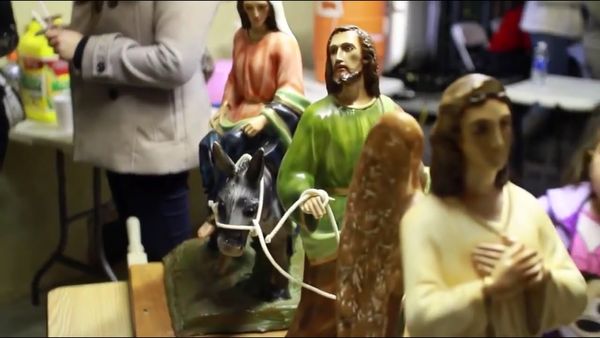
Practice "Las posadas" vocab + familia vocabulary together

What are these?

(Nosotros) celebramos
(Nosotros) cantamos
(Nosotros) caminamos
el vecino / la vecina / los vecinos
la calle
la canción
la tradición

Práctica individual

Sentences w/ "Las posadas" vocabulary

Para terminar

Practicar el vocabulario con Quizlet / Gimkit

Martes, 10 de diciembre

Yo puedo...

I can write sentences about multiple topics in Spanish to show what I can do at the end of the semester.

I can understand basic information about a cultural tradition after reading a short text.

End-of-semester Writing Benchmark

When you've finished and turned in your writing benchmark:

Las posadas en Nicaragua

https://wilkins.dropmark.com/1945533/37094273

Miércoles, 10 de diciembre

Yo puedo…

I can identify familiar words from a song connected to a cultural celebration.

I can write simple sentences about family and traditions.

Campanazo

Duolingo

Rompehielos

Song Warm-Up: “Ocho Kandelikas” and text:

https://wilkins.dropmark.com/1945533/37094257

Lección y Práctica en grupo

Complete each of these sentences in your notebooks:

  • Mi familia celebra… (Another option: En mi familia, celebramos...)
  • La canción “Ocho kandelikas” es…
  • En diciembre, mi familia y yo…
  • Mi tradición favorita es…

Para terminar

Practicar el vocabulario con Quizlet / Gimkit

Viernes, 12 de diciembre

Yo puedo...

I can write about celebrations.

Campanazo

Duolingo

Rompehielos

a. Mi familia celebra… (Another option: En mi familia, celebramos...)
b. La canción “Ocho kandelikas” es…
c. En diciembre, mi familia y yo…
d. Mi tradición favorita es…
e. En mi casa, siempre…
f. La celebración de … empieza a las …
g. En mi familia, comemos…
h. En diciembre, me gusta…
i. En enero, me gusta…

Lección

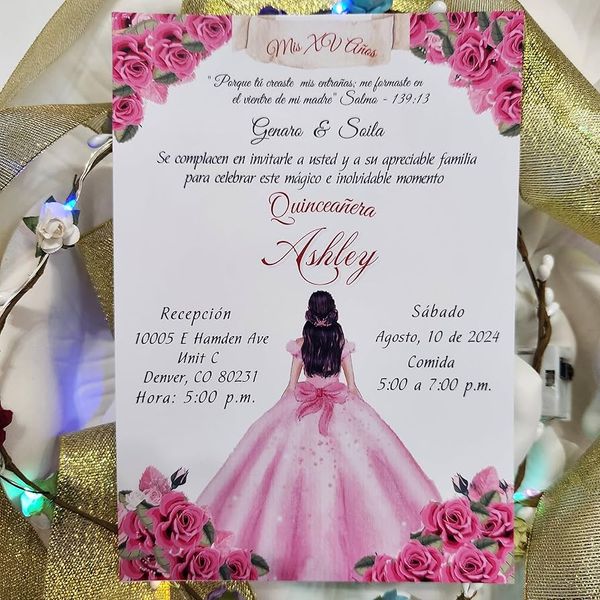
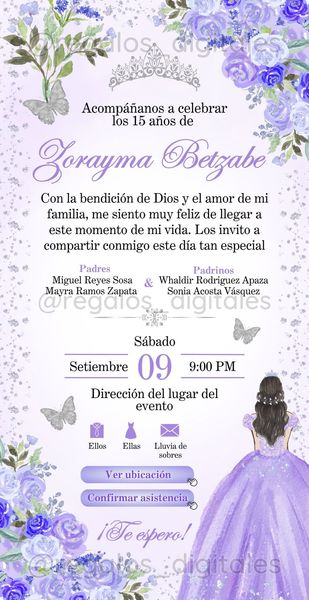
Quinceañera invitations
(Interpretive Practice)

Práctica en grupo

Vocabulary practice

Navidad y Quinceañera

John Wilkins

Text

La navidad en Nicaragua

Instructions

Read the short text about Las Posadas in Nicaragua. Answer the comprehension questions in English. At the end, you will complete two investigation questions. You may use your laptop for those two questions.

Las posadas

En Nicaragua, muchas familias celebran las posadas en diciembre.

Las posadas son una tradición muy importante en ciudades como Granada y Masaya. Durante las posadas, hay niños disfrazados de José, María y los pastores. Las familias caminan juntas por la calle. Ellos cantan canciones y buscan una “posada,” o un lugar para entrar.

Las familias van a casas cerradas. Ellos cantan para pedir un lugar para María, que va a tener un bebé. Las personas dentro de la casa responden con otra canción. Ellos dicen “no,” y los niños continúan la caminata.

Las posadas duran nueve días. Para muchas familias en Nicaragua, esta tradición es una parte especial de la Navidad.

Comprehension Questions (Answer in English)

1) In which two cities in Nicaragua are Las Posadas especially common?

2) Who do the children dress up as?

3) What do the people inside the closed houses do?
4) What Spanish verb does the noun "la caminata" come from? (Verbs end in -ar, -er or -ir.

Investigation Questions (Answer in English)

5) Use reliable sources from the internet to find out which countries celebrate "Las posadas." Write those countries here:

6) Compare "Las Posadas" to a winter or holiday tradition in the United States (or to another activity that you do with your family.) Provide at least one one similarity and one difference to your tradition and "Las Posadas". (Write your answer in paragraph format in English or Spanish.

John Wilkins

Text

John Wilkins

Text

John Wilkins

Text

Directions

Create a driver's license using your own personal information from a Spanish-speaking country.

Our goal is to write more about ourselves in real-life contexts and show that we recognize some common cultural symbols and examples from the Spanish-speaking world.

Before you begin your final draft, write your name and period are on your final draft paper.

1) Create your license with this information in Spanish:

  • Nombre y apellidos, cumpleaños, dirección (you do not have to use your real address), color de pelo, color de ojos, altura en centímetros (make sure you use centimeters, no decimals), firma, and the banner for your país (your chosen Spanish-speaking country).
  • The vocabulary terms above are labels. Each term should be on your license along with your personal answer.
  • You can select any country from the Spanish-speaking world. Pick a country that interests you.

2) Draw a picture of yourself:

What's important? You need to show the color of your hair and eyes so we can check them with the written examples. Your drawing doesn't have to be a masterpiece.

3) At the top, make a banner for your license using a single país.

You can choose any Spanish-speaking country you would like. The banner must show examples from the culture of your country. Good examples include famous landmarks, plants, animals (like the billetes we created), and/or famous people.

3 — Great 2 — Almost there 1 — Needs attention Content All required personal information provided including height in centimeters and signature. A couple / a few points missing or unclear. May have incorrect information based on descriptions Multiple terms missing and/or missing personal information Creativity and craftsmanship Picture drawn, hair + eye color clear, labels are symmetrical, country panel is neat and colorful. Picture and labels included but messy or rushed. No picture, missing parts, or very messy. Interculturality Spanish-speaking country banner shows a clear cultural symbols (history, landmarks, etc.) Country chosen but mistakes in nationality OR banner is simple/unclear No Spanish-speaking country OR banner missing.

John Wilkins

Text

Lunes, el primero de diciembre

Yo puedo…

I can identify family members in Spanish.

I can answer personal questions in Spanish about my family.

Campanazo

Duolingo

Rompehilos

Popcorn questions (notes out!)

¿Con quién vives?
¿Dónde vives?

Lección

Repasar algunas nuevas palabras / frases

https://quizlet.com/1034466226/ms-span-intro-mi-familia-flash-cards/

Práctica en grupo

Familia Bingo

https://wilkins.dropmark.com/1839807/36227544

Práctica independiente

Flashcards, Match, Learn and Test on Quizlet with vocab/prhrases set

Jueves, 04 de diciembre

Yo puedo...

I can identify family members and answer questions with Spanish family vocabulary.

I can write about my own family.

Campanazo

Duolingo práctica

Rompehielos

These are the most common last names in the USA:
Smith
Johnson
Williams
Brown
Jones

These are the most common last names in the Spanish-speaking world. What are they?
G… | M… | R… | L… | H…

Lección

Reading Checkpoint

Once you've completed the reading, write a description using the same format.
You can use,

Mi familia es... (grande / pequeña)
Vivo en...
Vivo con...
Mi mamá se llama... (etc.)

Práctica para terminar

Viernes, 05 de diciembre

Yo puedo…

I can say who's in my family.
I can speak about family relationships using "my" and "your".
I can say that things belong to different people in my family.

Rompehielos

1) I live with my uncle.
2) I am from New York.
3) You have a dog named “Fido”. (named = que se llama)

New sentence:
4) I live in my grandmother's house.
What’s different about this sentence?

Lección

Possessives in Spanish

Examples: My uncle’s house, my dad’s brother, etc.

Práctica en grupo

Quizlet, Gimkit with family vocabulary

Late Work??

John Wilkins

Text

Driver’s License Project

Write your name and your class period on the FRONT of this page.

Create your own driver's from a Spanish-speaking country. Follow the checklist below to create your license. All your text will be in Spanish.

1. Draw and fill in your driver’s license

On the back of this page, draw your own driver’s license.

Make it BIG so you have room to write all the information.

You must use all of this vocabulary on your license:

Nombre y apellidos

Cumpleaños

Dirección (you may make one up)

Color de pelo

Color de ojos

Altura (Use centimeters. No decimals)
Firma

País (choose ONE Spanish-speaking country)

Once you've created the labels above, use this checklist:

Checklist:

* My license is drawn big enough to write clearly

* I used all the vocabulary labels above

* I wrote my own information in Spanish (hair color, eye color, birthday, etc.)

* My height is in centimeters

* I chose ONE Spanish-speaking country for my project

2. Draw your license picture.

  • Show hair color
  • Show eye color
  • Picture is clear (does NOT have to be perfect)

3. Make a banner for your country.

At the top of your license, draw a banner for the Spanish-speaking country you chose.

Your banner should show at least 2 cultural examples, such as:

- Landmarks

- Plants or animals

- Famous people

- Other symbols from that country, including important colors

Checklist:

* I chose ONE Spanish-speaking country

* My banner includes 2 or more cultural examples

* My symbols match the country I chose

Rubric

3 — Great 2 — Almost There 1 — Needs Attention Content All vocabulary labels are on the license and match correctly. All personal information is written in Spanish. Height is in centimeters. Some vocabulary labels missing or unclear. Some information missing. Many labels missing OR information not in Spanish. Creativity & Craftsmanship Picture is clear. Hair + eye color shown. Work is neat and readable. Picture / art included but messy or rushed. Picture / art missing OR very messy. Interculturality Banner includes 2+ cultural symbols that clearly match the chosen Spanish-speaking country. Country chosen but banner is too simple or symbols do not clearly match. No country chosen OR banner missing.

John Wilkins

Text

John Wilkins

Text

John Wilkins

Text

John Wilkins

Text

Part A) Instructions

Before you read the texts below, fill in the English meanings for any of the Spanish vocabulary words you already know. Next, read the texts. After you read, come back to the chart and fill in the meanings you learned from the text.

Vocabulario

English Español English Español (yo) vivo el tío (nosotros) vivimos el primo nací en visito la madre la casa el padre la ciudad el abuelo la hermana

Part B) Instructions

Read the texts below. Answer the True/False questions and the Comprehension questions in English. If an answer is False, write a short reason why you selected False.

Lectura A

Me llamo Leandro y tengo doce años. Vivo con mi familia en Rosario, Argentina, una ciudad de tamaño medio cerca del río. Vivo con mi madre, mi padre y mi hermana menor. Mi madre trabaja en una oficina y mi padre trabaja en un hospital. Nací en una ciudad más pequeña, pero ahora vivimos en Rosario. Los fines de semana visitamos a mi abuelo, que vive a veinte minutos de nuestra casa.

True / False

  1. Leandro lives in a medium-sized city.
  2. His parents work in the same office.
  3. The family visits the grandfather on weekends.

Lectura B

¡Hola! Soy Mireya. Vivo con mi tío y mi primo en Cochabamba, Bolivia. Vivimos en un apartamento cerca del centro de la ciudad. Mi tío trabaja mucho, así que paso tiempo con mi primo. Él tiene trece años y le gusta leer. Nací en Sucre, pero mi familia cambió de casa hace dos años. También visitamos a mis abuelos los domingos.

True / False

  1. The apartment is far from the city center.
  2. Her cousin is thirteen years old.

Comprehension Questions

  1. Who does Mireya live with?
  2. What does her cousin like to do?
  3. What does the family do on Sundays?

Lectura C

Me llamo Damián. Vivo con mis padres y mi hermana mayor en Barranquilla, Colombia, una ciudad linda y muy animada. Nací en Barranquilla y siempre he vivido aquí. Vivimos cerca de la casa de mis tíos, y mis primos vienen a jugar casi todos los días. Mi familia es grande, y en casa hablamos español y un poco de inglés.

True / False

  1. Damián has always lived in Barranquilla.
  2. His cousins visit often.
  3. The family speaks only one language at home.

John Wilkins

Text

Instructions

Write your name and period in the top right-hand corner of this paper.

Read the three short texts about Ana, Mateo, and Carla below. Answer all the comprehension questions in English.

Me llamo Ana. Tengo doce años. Soy de Puebla, México, pero nací en Guadalajara. Vivo en un barrio pequeño cerca de una plaza. Soy baja y fuerte. Hoy estoy feliz porque no tengo mucha tarea (homework). Tengo cinco pesos en mi mochila para comprar una botella de agua en la tienda. Mi cumpleaños es en mayo. Soy amable y graciosa. A veces soy seria en la escuela, pero en casa soy muy alegre. Vivo con mi mamá, mi papá y mi hermano mayor. Me gusta leer, dibujar un poco y jugar con mi perro en el patio.

Questions (Answer in English)

1. What city and country is Ana from?

2. Where was she born?

3. How many pesos does she have?

4. Why is she happy today?

Soy Mateo. Tengo quince años. Estoy bien hoy porque hace sol y no hace frío. Soy alto y joven. No soy débil. Soy de Austin, Texas, pero nací en Monterrey, México. Camino a la escuela todos los días y me gusta escuchar música. Mi cumpleaños es el 3 de enero. Soy serio, pero no soy perezoso. Vivo con mis abuelos en una casa pequeña. Me gusta correr y practicar deportes. También soy amable con mis amigos y ayudo a mi abuelo en el jardín.

Questions

1. What city and country is Mateo from?

2. Where was he born?

3. Give at least two adjectives to describe Mateo?

4. When is his birthday?

Me llamo Carla. Tengo catorce años. Soy de Charleston, Carolina del Sur, pero nací en Bogotá, Colombia. Vivo cerca de una escuela grande y camino todos los días. Soy inteligente y trabajadora. No soy ni pobre ni perezosa. Estoy contenta hoy porque terminé mi tarea temprano. Mi cumpleaños es el 10 de octubre. Estoy muy emocionada por mi quinceañera (her upcoming quinceañera). Soy amable y a veces graciosa. Vivo con mis padres y mi hermana menor. Me gusta dibujar, escuchar música y hablar con mis amigas por teléfono.

Questions

1. How old is Carla?

2. What city and country is she from?

3. Where was she born?

4. What is she looking forward to?

5. When is her birthday?

John Wilkins

Text

Lunes, 17 de noviembre

Yo puedo...

I can say give descriptions about myself in Spanish
I can say my birthday in Spanish.
I can recognize numbers 0 - 100 in Spanish.

Campanazo

Duolingo

Rompehielos

Popcorn questions:
¿Cuántos pesos tienes?
¿Cuántos años tienes?
¿Cuándo es tu cumpleaños?
Háblame de ti (Tell me about yourself.)

Lección

Continuar con los numeros 0 - 100

Práctica en grupo

  • Repasar los días y meses

Martes, 18 de noviembre

Yo puedo...

I can say give descriptions about myself in Spanish
I can say my birthday in Spanish.
I can recognize numbers 0 - 100 in Spanish.

Campanazo

Duolingo

Rompehielos

A) Popcorn questions

1) ¿Cómo te llamas?
2) ¿De dónde eres? (Soy de..., Nací en...)
3) ¿Cuántos años tienes?
4) ¿Cuándo es tu cumpleaños?
5) Háblame de ti (Tell me about yourself.)

B) Quick adj practice
Ejemplo: three green backpacks (backpack = la mochila) = tres mochilas verdes

1) five red books (book = el libro)
2) twelve funny teachers

Práctica

(Quizlet and Gimkit are down)
Bingo if time (1 - 100 or 1 - 50)

Miércoles, 19 de noviembre

Yo puedo...

I can ask and answer introductory questions in Spanish with a partner.

Campanazo

Duolingo

(Noah enseñará la clase hoy.)

Rompehielos

Repasar preguntas
Rotate with partner

Lección

Adjetivos

Para terminar

Jueves, 20 de noviembre

Yo puedo...

I can say give descriptions about myself in Spanish
I can say my birthday in Spanish.
I can recognize numbers 0 - 100 in Spanish.

Campanazo

Duolingo

Rompehielos

Entregar poemas

Popcorn questions:
Use, "¿Y tú?" and repeat the question to ask your partner the same thing.

Repaso

  • los números
  • días y meses
  • preguntas comunes

Viernes, 21 de noviembre

Yo puedo...

I can say give descriptions about myself in Spanish.
I can understand personal descriptions of other people.
I can say my birthday in Spanish.

Campanazo

Duolingo

Rompehielos

1) ¿De dónde eres?
2) ¿Cuántos pesos tienes?
3) (Nueva pregunta) ¿Cuál es la fecha (date) de hoy (today)?
4) ¿Cuántos años tienes?

Lección

Interpretive Reading: https://wilkins.dropmark.com/1945533/37040676

Práctica en grupo

A) Review Reading
B) Vocab practice with Gimkit / Quizlet

John Wilkins

Text

Lunes, 17 de noviembre

Yo puedo...

I can write about school supplies students use in Spanish-speaking countries.

Campanazo

Duolingo

Rompehielos

(Popcorn Questions)

1) ¿Qué necesitas hoy para la clase de español?
2) ¿Qué tienes en tu mochila?

Lección

  • Phrases for describing school supplies
  • Link: https://quizlet.com/1108698305/ms-2025-publicidad-utiles-escolares-frases-utiles-flash-cards/
  • Review

Práctica en grupo

Introduce Publicidad de útiles escolares project. 2–3 sample advertisements together

https://wilkins.dropmark.com/1945533/37019041

Práctica independiente

ILT to review
instructions and rubric
begin to research based on Proyecto handout

Martes, 18 de noviembre

Yo puedo...

I can write about school supplies students use in a Spanish-speaking country.

I can speak about school supplies that I need and use here at Clifdale.

Rompehielos

(Popcorn Questions)
¿Qué necesitas para tu clase favorita?
¿Qué necesitas comprar este año (this year)?
¿Prefieres escribir con lápices o lapiceros?
Etc.

Lección

Quizlet: School supplies and Advertisement phrases

Práctica en grupo

Continue with rough drafts for advertisement project

Práctica independiente

ILT (independent learning time) with projects.

Para terminar

Notebook check progress

Miércoles, 19 de noviembre

Yo puedo...

I can write about school supplies students use in a Spanish-speaking country.

I can speak about school supplies that I need and use here at Clifdale.

Campanazo

Duolingo

Rompehielos

Popcorn Questions

¿Dónde está tu tienda? (ciudad y país)
(Other questions about project)

Lección

Review and Qs abt project.

Práctica en grupo

Continuar con proyecto: publicidad

Review phrases with Gimkit

Jueves, 20 de noviembre

Yo puedo...

I can write about school supplies students use in a Spanish-speaking country.

Campanazo

Duolingo

Rompehielos

https://wilkins.dropmark.com/1839807/36172387

Popcorn questions in English:
1) What is the purpose of the “Mochilas Felices”?
2) According to the poster, what kinds of items can people donate? List at least three.
3) Where can people take the donations? Name place and the schedule.

Publicidad

Requirements ☑ Review project handout in class. ☐ Choose a real city in a Spanish-speaking country. ☐ Look up the currency for that country. Use this currency (money) and formatting for all prices. Round random prices. ☐ Create your own store name for your ad. ☐ Draw at least five school supplies on your paper. ☐ Write the school supply term en español beside each drawing (for example: lápices, cuadernos, marcadores, mochilas, etc.). ☐ Write a price for each item using the correct currency and round numbers. ☐ Add a short Spanish description for each item using your own words and at least 5 Quizlet phrases. The Quizlet set is titled "MS: 2025, Publicidad útiles escolares, frases útiles." ☐ Make your ad neat, clear, and colorful. All of these steps are in the instructions and rubric.

Práctica

Repasar vocabulario

Viernes, 21 de noviembre

Yo puedo...

I can speak about school supplies.

I can write about school supplies students use in a Spanish-speaking country.

Campanazo

Duolingo

Rompehielos

Popcorn questions:
¿Qué tienes en la mochila? / ¿Qué hay en tu mochila?
¿Qué necesitas para la clase de español?
¿Cuál es tu primera clase?
¿Cuál es tu última clase?

Lección y práctica

Sell it to me! / Véndemelo
Sell me items from your advertisement. Can you convince Sr. Wilkins to buy from your tienda?

Práctica en grupo

Gimkit / Quizlet con el vocabulario

John Wilkins

Text

Proyecto: Publicidad de Útiles Escolares

Create a paper advertisement for school supplies from a Spanish-speaking country. Create a store for your advertisement, and label school supplies in Spanish. (Use phrases from our Quizlet set.) Your goal is to make an ad that convinces students to buy school supplies from your store!

Instructions

1. Use Phrases From the Quizlet Set

Your ad should include at least 5 descriptions / phrases from our Quizlet set, "MS: 2025, Publicidad útiles escolares, frases útiles".

The language in your ad does NOT have to be perfect, but needs to be understandable. I may ask you for clarification. It is OK to take risks in describing your school supplies.

Examples of the type of phrases you can use:

  • perfecto para…
  • ideal para estudiantes...
  • muy barato...

Example: “Esta regla es perfecta para tu clase de matemáticas.”

2. Choose a Real City, Country, and Currency

Your advertisement should use a real city in a Spanish-speaking country and the actual currency (pesos, soles, euros, quetzales, etc.) of the place you've selected.

Your store name can be anything you choose.

3. Draw School Supplies, Labels and Price

We've done this on Canva/PowerPoint in the past, but now I'm only accepting paper submissions.

Include at least 5 drawn images of school supplies.

Each item must be:
- labeled in Spanish,
- have a price in local currency,
- have short description of what it is, how to use it, or why someone should buy it. (See Instructions, # 1).

If the country uses a different word and we’ve learned it (ex. plumón), try to use that one, but the vocabulary we learn in class is always acceptable and useful.

4. Use Internet for Ideas

Before drawing, Google real examples using:
Publicidad de útiles escolares 2025 and anuncio de útiles escolares 2025

You may also look up schools in your country and view their 2025 school supply lists. Do not simply copy an advertisement or school supplies list.

5. Take Risks to Make Language

If you have an issue or do not understand something that is not specifically described in this outline or rubric, it's not being graded. Take chances, try new ideas, and be creative.

You do not lose points for trying something; you move up the rubric by meeting the criteria listed here.

Rubric

Category 3 – Good 2 – Getting There 1 – Needs Attention Language Understandable and (mostly) accurate Spanish labels and descriptions. Uses 5 or more phrases from Quizlet set. Errors do not interfere with meaning. Labels and descriptions included. Some errors that may cause confusion, but meaning mostly clear. Attempted Quizlet phrases. Missing descriptions, errors make text unclear, hard to understand, and/or not in Spanish. Little or no use of Quizlet phrases. Classes and Materials Vocabulary Correct unit vocabulary, correct terms AND may use country-specific terms when available. All items clearly and correctly labeled. Mostly correct vocabulary. Occasional inaccuracies. Incorrect, missing, or mislabeled items. Workmanship Colorful, and interesting. Drawings are clear and neat (enough). Ad is persuasive. Some effort in supplies, layout and labeling. Messy, unclear and/or incomplete. May be hard to read and/or poorly done.

John Wilkins

Text

Instructions

Read the descriptions about Martín and Isidora. Then look at each question in the charts and answer in English using information from the reading. After that, use the internet to find the website for Colegio Sagrados Corazones Monjas Francesas de Viña del Mar to answer questions for part 3, "Colegio Sagrados Corazones" and part 4, "Para terminar: útiles escolares."

1) Martín

Me llamo Martín y soy de México. Tengo catorce años y estudio en la escuela secundaria de mi ciudad. En mi mochila tengo libretas, lápices, una calculadora y papel. Mi clase favorita es ciencias. Yo necesito una regla para la clase de matemáticas porque tengo que dibujar muchos diagramas. Mi profesor de matemáticas es un poco estricto, pero me gusta la clase. A mí me gusta jugar afuera después de la escuela.

Question Answer Where is Martín from? How old is he? What items does he have in his backpack? (Hint: libretas is used in Mexico for cuadernos.) What class is his favorite? What does he need for math class? Why? What is his math teacher like? What does he like to do after school? .

2) Isidora

Hola, me llamo Isidora, y soy de Viña del Mar, Chile. Mi escuela se llama Colegio Sagrados Corazones Monjas Francesas. Mi clase favorita es ciencias sociales. En mi mochila tengo cuadernos, lápices, papel y mi estuche. También llevo mi botella de agua porque hace calor en el verano. Yo necesito mi tablet y un libro de texto para la clase de historia. Mi profesora de historia es aburrida, pero quiero sacar una buena nota. No me gusta la clase de ciencias porque es difícil. La clase que más me gusta es matemáticas. En mi tiempo libre, juego fútbol, toco el piano, o me siento con mis amigas a tomar un mate en la playa.

Question Answer Where is Isidora from? What items are in her backpack? What does she need for history class? What is her history teacher like? What subject does she not like and why? .

3) Colegio Sagrados Corazones

Use the internet to find information about Colegio Sagrados Corazones Monjas Francesas de Viña del Mar, and answer the questions below. If the information is not listed on the school’s website or another source, write that you could not find the information.

Question Hint or Notes Answer 1) Where is Colegio Sagrados Corazones Monjas Francesas located? Look for the city and street. 2) What kind of school is it? Private or public? Religious or secular? 3) If it's a private school, how much does it cost to go there? Search for "matrícula" or "costos" or monthly fees. 4) What do students wear to school? Check the “uniforme” section on the website. 5) What’s the weather like for students at the school today? How do you know? Write something about the Southern Hemisphere here! In the Southern Hemisphere, it's...

4) Para terminar: Útiles escolares

Once you find the school website, go to “Informaciones” at the top of their webpage. From there, click on “Útiles escolares.”

Look at the school supply lists posted for different grade levels. What materials do students your age need for their classes?

Write at least 5 items in English and Spanish below.

John Wilkins

Text

John Wilkins

Text

John Wilkins

Text

Lunes, 10 de noviembre

Yo puedo...

I can give descriptions about my classes and teachers here at Clifdale.
I can talk about my Clifdale Schedule.
I can understand another student’s description of their school.

Campanazo

Duolingo

Rompehielos

Popcorn questions
Focus on three topics for interpersonal assessment:
1. Things we do at Clifdale
2. Opinions about teachers and classes
3. School Schedules

Lección (Assessment)

Begin Integrated Performance Assessment

Materiales - Assignment

Martes, 11 de noviembre

Yo puedo...

I can give descriptions about my classes and teachers here at Clifdale.
I can talk about my Clifdale Schedule.

Campanazo

Duolingo

Rompehielos

Popcorn questions

Voto: opción

Interpretive Reading OR Catch up, review

Miércoles, 12 de noviembre

Para ponernos al día

  • Completar práctica auditiva: https://wilkins.dropmark.com/1945533/37005011

  • Completar evaluación lectora

  • Completar trabajos atrasados

Jueves, 13 de noviembre

Yo puedo...

I can give descriptions about my classes and teachers here at Clifdale.
I can talk about my Clifdale Schedule.

Rompehielos

Popcorn questions

Completar evaluaciónes orales

Intepretive Reading + Búsqueda de tesoro en internet

(We will review this and the listening as time allows)

Viernes, 14 de noviembre

Yo puedo…

I can understand descriptions about school supplies.
I can understand other students' descriptions of their school.

Campanazo

Duolingo

Rompehielos

Popcorn questions INCLUDING ¿Qué hay en tu mochila?

Repasar folletos/trabajos anteriores

Para terminar

Gimkit si hay tiempo

John Wilkins

Text

John Wilkins

Text

John Wilkins

Text

Miércoles, 05 de noviembre

Yo puedo...

I can ask and answer questions about my classes, teachers, and schedule.

Campanazo

Duolingo

Rompehielos

Popcorn questions (5 from Interpersonal Practice WS)

"¡Quiero estudiar para las evaluaciónes!"

  • Flashcards, Match, Learn and Test (and Blocks) with each of the unit Quizlet sets
  • Interpersonal handout - practice with a partner

Lección

Review and practice interpersonal questions

Patterns:

¿Te gusta...?
¿Cuál es...?
¿Prefieres...?

Complete interpersonal questions handout with your own answers.

Práctica en grupo

Conversation practice
Use follow ups: ¿Y tú? and try ¿Por qué?

Práctica independiente

Review classes, adjectives and materials for upcoming IPA.

Jueves, 06 de noviembre

Yo puedo…

I can ask questions about classes, and school supplies.
I can describe my school life for next week’s IPA with lists of words, phrases and full sentences.

Campanazo

Duolingo

Rompehielos

Have your interpersonal speaking handout ready
1) What do I already know well?
2) What do I need to review?

Lección

Prompt more questions using
termina, empieza, perfiero/prefieres, ¿Y a ti? follow up, etc.

Práctica en grupo

Repasar vocabulario de esta unidad

Viernes, 07 de noviembre

Yo puedo…

I can describe some classroom supplies and products in Latin America.

I can compare some of the words used for school supplies different Latin American countries.

Campanazo

Duolingo

Rompehielos

Popcorn questions OR If possible, school supply product videos from Latin American commercials

Lección

Interpretive Reading
Words varying by region.

Práctica en grupo

Busqueda de tosoro (Scavenger Hunt)

Práctica independiente

Vocab comparison with the school supplies if we have time

John Wilkins

Text

Instructions

Answer all the questions below in complete sentences when you can. If you cannot write full sentences, answer with phrases or at least lists. Use your own ideas and your own opinions. Write your answers in the second column in Spanish.

(Questions labeled 8º grado are required for 8th grade, but anyone can try them.)

Tema: Actividades aquí en Clifdale / Activities Here at Clifdale

Preguntas Tu propia respuesta / Your own answer ¿Qué te gusta hacer en tu tiempo libre? ¿Qué actividad te gusta hacer aquí en Clifdale? ¿Qué te gusta hacer en la cafetería? ¿Qué te gusta hacer en el gimnasio? ¿Qué te gusta hacer en la biblioteca? ¿Qué haces después de tus clases? ¿Qué haces en tu clase de lengua y literatura? ¿Qué prefieres, el gimnasio o la cafetería?

Tema: Opiniones sobre nuestras clases, maestros y la escuela / Opinions About Our Classes, Teachers, and School

Preguntas Tu propia respuesta / Your own answer ¿Cuál es tu clase favorita? ¿Cuál es tu clase más divertida? ¿Cuál es tu clase más aburrida? ¿Cuál es tu clase más difícil? ¿Cuál es tu clase más fácil? ¿Cómo es tu maestro (o maestra) de inglés? ¿Cómo se llama tu maestro (o maestra) más amable? ¿Prefieres la clase de español o la clase de ciencias? ¿Por qué te gusta tu clase favorita? ¿Te gusta la comida de la cafetería? (8º grado) ¿Cómo te sientes aquí en Clifdale? (8º grado) ¿Cómo te sientes en tu clase de... ?

Nuestros horarios y materiales / Our Schedules and Materials

Preguntas Tu propia respuesta / Your own answer ¿A qué hora empieza tu clase favorita? ¿A qué hora empieza tu clase de español? ¿A qué hora empieza tu última clase? ¿Qué necesitas para la clase de matemáticas? ¿Qué necesitas para la clase de ciencias? ¿Qué usas en la clase de español? ¿Qué prefieres, las clases por la mañana o por la tarde?

John Wilkins

Text

John Wilkins

Text